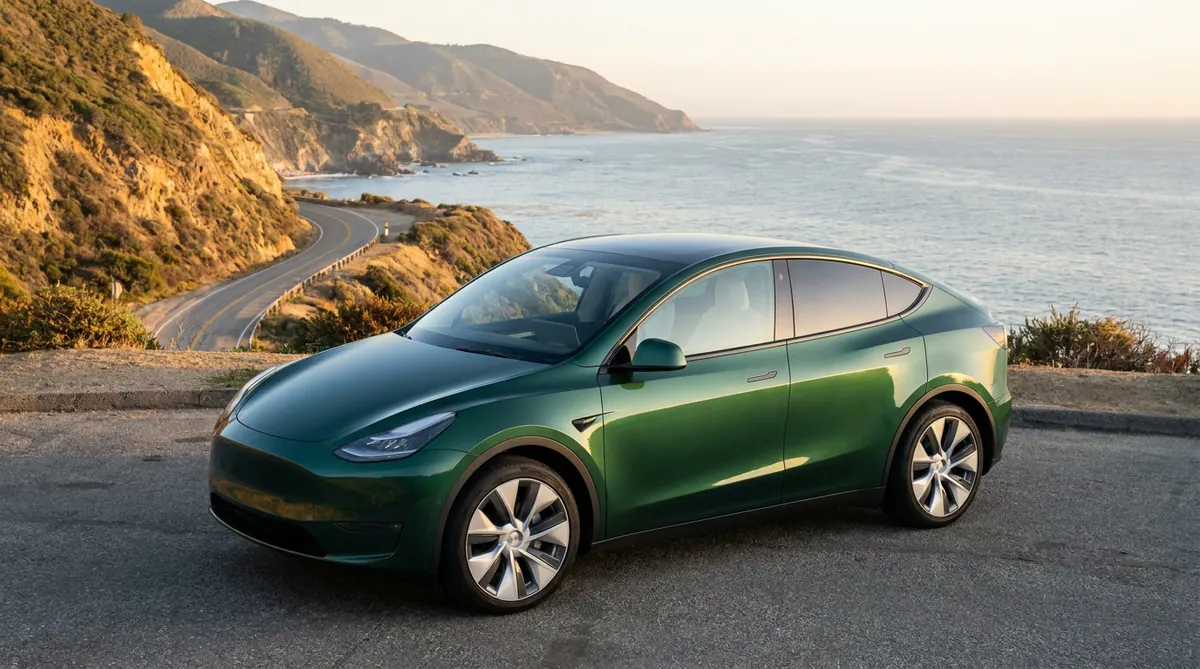
Tesla Model Y Owner's Guide
Accessories, owner reviews and fit — everything for your Tesla Model Y, in one place.
The Model Y is the best-selling EV on the planet, and it is genuinely one of the most accessory-friendly cars you can own — 30.2 cu ft behind the second row, 75.5 cu ft with the seats folded, a 4.1 cu ft frunk and roughly 2 cu ft of hidden sub-trunk under the boot floor. That is four separate spaces that collect mud, shopping and dog hair, and each has a liner made for it. The one thing to get right before you buy anything: the 2025 ‘Juniper’ refresh changed the front bumper, the interior and the centre screen, so a surprising amount of pre-2025 gear simply does not fit a Juniper car — and vice versa. Work out which one you have first, then buy. Below is the gear that matters for a Model Y, what fits which year, and what owners actually report.
Accessories that matter for the Tesla Model Y
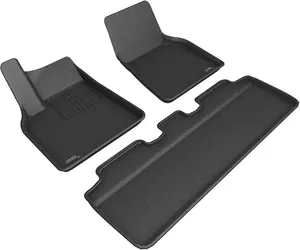 All-weather floor mats (+ trunk & frunk liners)The Model Y's flat floor, deep trunk well, frunk, and sub-trunk all collect mud and grocery spills — get a model-specific set that covers the cargo areas, and match it to Juniper vs. pre-2025.Explore →
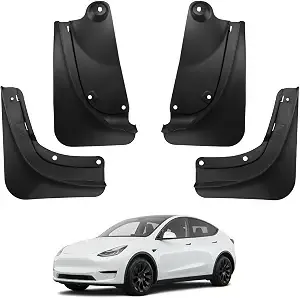 No-drill mud flapsThe Model Y throws road spray onto the lower doors and rocker, right over the battery. No-drill flaps use the factory holes and install in about 30 minutes.Explore →
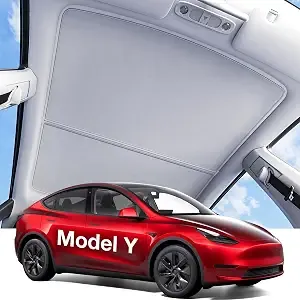 Glass-roof sunshadeThat big panoramic roof bakes the cabin. A clip-in sunshade cuts heat and AC load — real range savings on a hot day — and Juniper needs the refreshed-fit version.Explore →
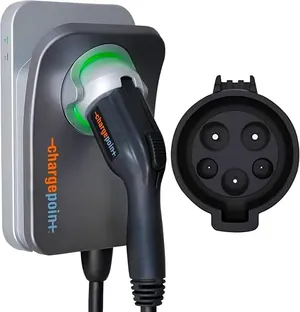 Home chargerThe Model Y uses NACS. A ChargePoint Home Flex or Tesla Wall Connector adds ~30-44 miles of range per hour overnight; the guide covers plug-in vs. hardwired.Explore →
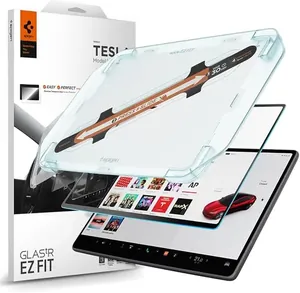 Touchscreen protectorYou control the whole car through the center screen. A matte 9H protector kills glare and scratches — Juniper's 15.4-inch screen needs its own version.Explore →
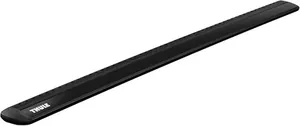 Roof rackFor bikes, boxes, or a rooftop tent. Model Y-specific aero bars keep range loss low; mind the ~165 lb dynamic roof limit.Explore →
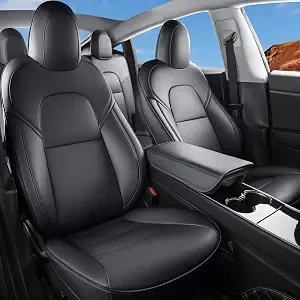 Seat coversProtect the light interior. Choose a Model Y-specific set that clears the side airbags and works with heated (and, on some trims, ventilated) seats.Explore →
 Dash camA supercapacitor cam complements Sentry Mode and survives the cabin heat that kills battery-based cams.Explore →
Model-specific gear worth buying
3D MAXpider Kagu Floor Mats (Model Y)
The Tesla-community favorite, laser-cut for the Model Y with raised all-weather channels. Match Juniper vs. pre-2025.
Check price on AmazonBASENOR No-Drill Mud Flaps (Model Y)
Factory-hole install, all-weather TPE, set of four — no drilling or tape.
Check price on AmazonTesmanian Glass Roof Sunshade (Model Y)
Two-piece anti-sag shade that blocks about 99% of solar heat through the panoramic roof.
Check price on AmazonWhat owners actually say
The 2025 "Juniper" refresh is the story here — owners who found the older Model Y stiff and rough now single it out as a genuine step up, while a few livability quirks and a busy recall slate keep it from a clean sweep.
Owners consistently praise
- The refreshed ride and quiet — the retuned suspension smooths out rough pavement that used to be a common complaint, and the cabin is noticeably quieter at highway speed. It's the number-one thing repeat owners point to.
- Improved fit and finish — the panel-gap and interior-quality gripes that dogged early cars are largely resolved on Juniper builds.
- Low running costs — long-term owners report tires and cabin air filters as the main ongoing expense out to around 60k miles.
- Range and comfort features now matching expectations — powered reclining rear seats, and a usable frunk and sub-trunk.
Common gripes
- Rear visibility — the small rear window plus an awkward parcel shelf is the most-repeated livability complaint on Juniper cars.
- Isolated early-build niggles — creaky wheel covers and the occasional wiring issue on brand-new cars still show up.
- Firmer ride on pre-2025 cars — if you're shopping used, the older suspension feels harsher on bad roads.
Bottom line: Juniper is a real refinement leap, and the ride and quiet improvements are what owners love most. Go in with eyes open on rear visibility and the 2025–26 recall list — none of it is deal-breaking if the recalls are done.
How we built this: an original summary of public owner discussion (Reddit, owner forums, and the consumer-review sections of Edmunds and Kelley Blue Book) plus factual recall and reliability data from NHTSA and Consumer Reports. We don't quote or republish anyone's reviews — we summarize the recurring themes in our own words. Sentiment reflects July 2026 and can shift as models age and updates roll out.
Model Y dimensions, fitment and what does not fit
The numbers you need before buying anything
| Measurement | 2025–26 (Juniper) | 2020–2024 (Legacy) |
|---|---|---|
| Boot, behind second row | 30.2 cu ft / 854 L | 30.2 cu ft / 854 L — unchanged |
| Boot, rear seats folded | 75.5 cu ft / 2,138 L | 72.1 cu ft / 2,041 L |
| Frunk | 4.1 cu ft / 117 L | 4.1 cu ft / 117 L — unchanged |
| Sub-trunk (under boot floor) | ~2 cu ft / 57 L | ~2 cu ft / 57 L |
| Length / width | 188.6 in / 75.6 in | Very close; bumpers differ |
| Dynamic roof load | ~165 lb | ~165 lb |
The seats-folded figure is the one that changed: Juniper gains 3.4 cu ft because the rear bench folds flatter. That matters for cargo liners — a liner cut for the older, less-flat fold can sit proud at the seat-back on a Juniper car. If you want the seven-seat layout, that is the separate Model Y L, which takes maximum capacity to about 89 cu ft.
Payload is worth knowing before you load a roof box and five people: GVWR is around 5,548 lb, giving roughly 1,147 lb of payload. The ~165 lb dynamic roof limit is the number that actually constrains roof racks — it includes the bars, the box and the contents, so a 50 lb box leaves you about 115 lb of gear.
Juniper vs Legacy: what genuinely does not carry over
| Accessory | Cross-compatible? | Why |
|---|---|---|
| Centre screen protector | No | Juniper's display is 15.4 in against the older 15.0 in. A legacy protector will not line up. |
| Floor mats | No | The footwells and centre console were redesigned. Buy the set that explicitly lists 2025/Juniper. |
| Mud flaps | No | New front and rear bumpers and different mounting points. |
| Boot / cargo liner | Risky | Fits, but the flatter Juniper seat fold changes how the liner sits at the seat-back edge. |
| Glass-roof sunshade | Check the listing | Both cars have the panoramic roof, but trim and clip locations changed with the refresh. |
| Frunk and sub-trunk liners | Usually yes | Neither space changed dimensionally. |
| Dash cams, phone mounts, chargers | Yes | Universal gear — nothing fit-specific. |
Juniper also adds a small rear screen for second-row passengers, which is its own (optional) protector, and the car gained acoustic glass — part of why owners describe the refresh as noticeably quieter.
Charging: NACS, and what your trim can actually take
The Model Y uses Tesla's NACS plug. The part people get wrong is the onboard AC charger, because it differs by trim: Long Range and Performance cars accept 11.5 kW (48A), while the RWD / standard-range car is capped at 7.7 kW (32A). If you drive the RWD, a 40A portable charger buys you nothing over a 32A one — the car is the limit, not the cable. Our portable charger guide has the full table of what each amperage adds per hour; the home charger guide covers plug-in versus hardwired.
A J1772 cable works on any Model Y through the adapter that ships with the car, so you are not restricted to Tesla-branded hardware.
Frequently asked questions
Q: Do accessories for the older Model Y fit the 2025 Juniper?
A: Often no. Screen protectors, floor mats and mud flaps are the three that definitely do not carry over -- the screen went from 15.0 to 15.4 inches, the footwells and console were redesigned, and both bumpers changed. Frunk liners, dash cams, phone mounts and chargers do carry over. Always buy the version that lists 2025/Juniper for anything fit-specific.
Q: How much cargo space does the Model Y actually have?
A: 30.2 cu ft behind the second row and 75.5 cu ft with the rear seats folded on a 2025-26 Juniper (72.1 cu ft on 2020-2024 cars), plus a 4.1 cu ft frunk and about 2 cu ft of sub-trunk under the boot floor. The seven-seat Model Y L goes to roughly 89 cu ft.
Q: What can I put on the roof?
A: The dynamic roof load limit is about 165 lb, and that figure includes the crossbars and the box, not just what you pack. A typical 50 lb cargo box leaves you around 115 lb of gear. Use Model Y-specific aero bars -- generic bars cost noticeably more range at highway speed.
Q: What's the single best first upgrade?
A: All-weather floor mats with the boot, frunk and sub-trunk liners. They cover four separate dirt-collecting spaces and protect the surfaces that affect resale most. In a hot climate a glass-roof sunshade is a close second -- the panoramic roof is a genuine heat load on the air conditioning.
Q: Does the Model Y need mud flaps?
A: They meaningfully cut rock chips and salt spray on the lower doors and the rocker panel, which sits directly over the battery pack. No-drill sets use the factory holes and take about 30 minutes. Note that Juniper and pre-2025 flaps are not interchangeable.
Q: How fast can a Model Y charge at home?
A: It depends on the trim, not the charger. Long Range and Performance cars accept 11.5 kW (48A); the RWD standard-range car is capped at 7.7 kW (32A). At 40A on a NEMA 14-50 outlet you are adding roughly 30 miles of range per hour, and a base RWD will draw 32A from a 40A cable regardless.
Specs current as of October 2026