Best Roof Racks for Electric Vehicles
A roof rack turns an EV into a road-trip hauler for bikes, boxes, skis, and kayaks — but on an EV, everything up top costs range. An empty low-profile crossbar set runs about 3–8% at highway speed; a loaded cargo box can be 10–20%. The good news: quality racks come off in minutes without tools, so you only pay the penalty when you're actually hauling. The other EV-specific rule is the roof weight limit — a Model 3/Y is rated about 165 lb dynamic (while moving), and exceeding it risks roof damage and warranty headaches. Here are four systems sold on Amazon now.
Roof rack picks at a glance
| Pick | Type | Fit | Range impact (empty) | Weight limit | Street price |
|---|---|---|---|---|---|
| Thule WingBar Evo (+ Tesla fit kit) Best Overall | Airfoil aero crossbars | Model 3/Y with fit kit (+ most cars) | ~2–5% | ~165 lb dynamic (car-limited) | ~$400-500 (bars + kit) |
| Yakima StreamLine Best Value | Aero crossbars | Model 3/Y with fit kit (+ most cars) | ~3–6% | ~165 lb dynamic | ~$300-400 |
| Tesla Model Y Roof Rack (OEM) Best OEM Fit | OEM aero crossbars | Model Y (exact) | Lowest — engineered for aero | 165 lb dynamic | ~$430 |
| Yeslak Aluminum Crossbars Budget | Fixed aluminum crossbars | Tesla Model 3/Y specific | ~4–7% | ~165 lb dynamic | ~$130-180 |
What to look for in an EV roof rack
- Weight capacity and how the load affects your range
- Aerodynamics — low-profile designs preserve efficiency
- Vehicle-specific fit vs universal mounting
- Material durability and weatherproofing
- How easily it installs and removes without tools
Our top EV roof rack picks for 2026
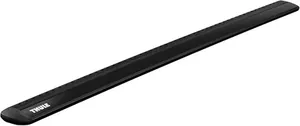
Thule WingBar Evo (+ Tesla fit kit) — Best Overall
- Type: Airfoil aero crossbars
- Fit: Model 3/Y with fit kit (+ most cars)
- Range impact (empty): ~2–5%
- Weight limit: ~165 lb dynamic (car-limited)
- Street price: ~$400-500 (bars + kit)
The Thule WingBar Evo is the standard recommendation for a reason: an airfoil bar shaped to cut drag and wind noise, the best accessory ecosystem (bike, ski, and box mounts all click in), and a rock-solid fit with the correct Tesla kit. Empty, it's among the lowest-drag racks you can buy — owners report ~2–5% range loss versus 5%+ for square bars. It's an investment, but it's the system you build on for years. Buy the fit-kit number for your exact model and year.
Best for: Owners who want the quietest, lowest-drag rack and a huge accessory ecosystem.
Pros:
- ✓ Airfoil bars — lowest drag and wind noise
- ✓ Best-in-class accessory ecosystem
- ✓ Tool-free removal
- ✓ Thule reliability and warranty
Cons:
- ✗ Priciest system here (bars + fit kit)
- ✗ Fit kit is model/year-specific
- ✗ Overkill if you rarely haul
Yakima StreamLine — Best Value
- Type: Aero crossbars
- Fit: Model 3/Y with fit kit (+ most cars)
- Range impact (empty): ~3–6%
- Weight limit: ~165 lb dynamic
- Street price: ~$300-400
Yakima's StreamLine system delivers most of the Thule experience for less: good aerodynamics, a broad accessory range, and tool-free install with the right landing pads and clips for your Tesla. Wind noise is slightly higher than the WingBar Evo but well-managed, and Yakima's accessories are just as easy to live with. If you want a name-brand aero rack and the Thule's price gives you pause, this is the smart pick.
Best for: Owners who want aero-rack quality and a big accessory range at a lower price.
Pros:
- ✓ Solid aerodynamics for less than Thule
- ✓ Wide Yakima accessory ecosystem
- ✓ Tool-free install and removal
- ✓ Strong reputation
Cons:
- ✗ Slightly more wind noise than Thule
- ✗ Still needs model-specific mounting hardware
- ✗ Not the cheapest option
Tesla Model Y Roof Rack (OEM) — Best OEM Fit
- Type: OEM aero crossbars
- Fit: Model Y (exact)
- Range impact (empty): Lowest — engineered for aero
- Weight limit: 165 lb dynamic
- Street price: ~$430
Tesla's own Model Y rack is engineered from scratch for minimal drag, noise, and range loss, and it blends into the roofline like nothing aftermarket does. T-slot aluminum bars accept ski, bike, and box attachments, and the mechanism installs at home in minutes. If you want guaranteed OEM fit and the cleanest look — and you're staying in the Tesla accessory lane — it's the safest pick, though the accessory ecosystem is narrower than Thule or Yakima.
Best for: Model Y owners who want guaranteed OEM fit and the cleanest integrated look.
Pros:
- ✓ Engineered for the lowest range/noise impact
- ✓ Seamless OEM look
- ✓ T-slot bars fit standard attachments
- ✓ Easy at-home install
Cons:
- ✗ Model Y only
- ✗ Smaller accessory ecosystem than Thule/Yakima
- ✗ OEM pricing
Yeslak Aluminum Crossbars — Budget
- Type: Fixed aluminum crossbars
- Fit: Tesla Model 3/Y specific
- Range impact (empty): ~4–7%
- Weight limit: ~165 lb dynamic
- Street price: ~$130-180
For occasional haulers, a Tesla-specific aluminum crossbar set from a brand like Yeslak gets a box or bikes up top for a fraction of Thule money. They're lockable, bolt to the Tesla's roof points, and handle light-to-moderate loads fine. You give up the airfoil shaping (a bit more drag and noise) and the deep accessory ecosystem, but if you just need crossbars a few times a year, they're plenty.
Best for: Occasional haulers who want cheap, Tesla-specific crossbars.
Pros:
- ✓ A fraction of the price of Thule/Yakima
- ✓ Tesla-specific bolt-on fit
- ✓ Lockable
- ✓ Fine for light/occasional loads
Cons:
- ✗ More drag/noise than airfoil bars
- ✗ Limited accessory compatibility
- ✗ Lower-volume brand, thinner support
The EV range math
An empty low-profile rack costs roughly 3–8% of range at highway speed; a roof box 10–20%; bikes standing upright can be worse than a box. Because the penalty only applies while the rack is mounted, buy a system that removes tool-free and take it off between trips. Airfoil bars (Thule, Yakima) lose noticeably less than square or basic aluminum bars.
Don't want a permanent rack? Soft rooftop cargo bags are actually the best-selling "Tesla roof" products on Amazon — they strap to crossbars (or through the door frames on some models) and haul gear for well under $100. The trade-off is more drag and range loss than low-profile bars, and less security, but for occasional trips they're a cheap, no-commitment option.
Respect the roof weight limit
The Model 3/Y are rated about 165 lb dynamic (while driving) and more when parked. That 165 lb includes the rack, the attachment, and the cargo — easy to exceed with two e-bikes. Overloading risks roof or glass damage that Tesla won't warranty, so check your exact model's figure before you load up.
Frequently asked questions
Q: How much range will I lose?
A: Empty, a low-profile aero rack costs ~3–8% at highway speed; a loaded cargo box 10–20%. Remove it between trips — all the picks here come off without tools — and you only pay when hauling.
Q: Will a roof rack fit the glass-roof Tesla?
A: Yes — these systems mount to the roof's fixed points, not the glass. Use the correct model/year fit kit so the load path is on the structure, not the panel.
Q: How much weight can I put up there?
A: Roughly 165 lb dynamic on a Model 3/Y, including the rack and mounts. Don't exceed it; roof-load damage usually isn't covered by warranty.
Q: Thule, Yakima, or OEM?
A: Thule for the quietest ride and biggest accessory range; Yakima to save money; Tesla OEM for guaranteed fit and the cleanest look.
Shopping for a specific EV? See accessory picks for the Model Y, Model 3, Cybertruck, or browse all vehicles.