EV Paint Protection Film (PPF): DIY Kits and Guide
Paint protection film (PPF) is a clear, self-healing urethane layer that takes rock chips and scratches so your paint doesn't — and on an EV with soft factory paint and a big front end catching highway debris, it's the best physical protection there is. Full-body PPF is a professional job costing thousands, but here's what most people miss: the damage almost always lands in a few predictable spots — front bumper, hood edge, door handle cups, door edges, rockers — and those high-wear areas come as precut, DIY-installable kits. Here are four ways to protect an EV yourself on Amazon, plus what to know before paying for full-body.
PPF pick at a glance
| Pick | Coverage | Film type | Self-heal | Difficulty | Street price |
|---|---|---|---|---|---|
| Spigen PlatinumShield Precut PPF (Model Y Fender) Best Overall | Precut for Model Y fender (2021-2026) | Self-healing TPU/urethane, UV-stabilized | Yes, minor scuffs disappear with heat | Easy -- precut, no cutting on the car | ~$46 |
| 3M Scotchgard Paint Protection Film Best Trusted Film | Precut kits + bulk rolls | 3M urethane, gloss | Yes | Intermediate | ~$60–200 |
| VViViD Clear PPF Roll Best DIY Value | Bulk roll (cut your own) | Urethane/TPU, gloss | Light | Beginner–intermediate | ~$30–70 |
| Rvinyl Precut Door Cup and Edge Kit Best High-Wear Kit | Door cups + door edges (precut) | 3M/urethane | Yes | Beginner | ~$25–50 |
What to look for in DIY paint protection film
- Correct fit for your model and year
- Material grade (self-healing PPF, ceramic hardness, forged vs cast wheels)
- Whether it affects range, warranty, or sensors/cameras
- DIY-friendly vs professional install
- Finish, durability, and how it holds up to weather and car washes
Our top DIY paint protection film picks for 2026
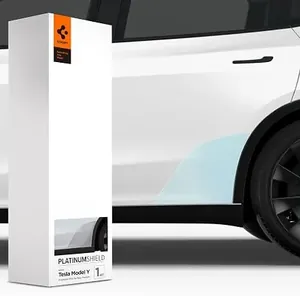
Spigen PlatinumShield Precut PPF (Model Y Fender) — Best Overall
- Coverage: Precut for Model Y fender (2021-2026)
- Film type: Self-healing TPU/urethane, UV-stabilized
- Self-heal: Yes, minor scuffs disappear with heat
- Difficulty: Easy -- precut, no cutting on the car
- Street price: ~$46
Spigen's PlatinumShield line is real, precut, self-healing PPF -- just sold per-panel (fender, door handle, etc.) rather than as one whole-car kit. The fender kit is computer-cut for the Model Y specifically, so there's no trimming on the car, and the UV-stabilized urethane resists yellowing better than cheap PPF. Comes with the install solution and squeegee. Buy the panels that matter most (fenders and door handles take the worst rock chips) rather than one do-everything kit.
Best for: Owners who want real, precut, self-healing PPF on the highest-wear panels without a full-body shop install.
Pros:
- ✓ Genuinely precut for the Model Y -- no cutting required
- ✓ Self-healing, UV-stabilized urethane
- ✓ Includes install solution and squeegee
- ✓ Easy enough for a careful first-timer
Cons:
- ✗ Sold per panel, not as one whole-car kit -- buy several for full coverage
- ✗ Only covers the specific panel it's cut for
- ✗ Model Y fender fit only; other panels/models are separate listings
3M Scotchgard Paint Protection Film — Best Trusted Film
- Coverage: Precut kits + bulk rolls
- Film type: 3M urethane, gloss
- Self-heal: Yes
- Difficulty: Intermediate
- Street price: ~$60–200
3M essentially invented PPF, and its Scotchgard Pro film is a benchmark for clarity and durability. You can buy it as model-specific precut kits or as bulk film to cover edges and rockers yourself. It's a slightly more forgiving install than some, self-heals light scratches, and has a long track record of not yellowing. A safe, widely available choice whether you want a precut kit or to trim your own high-wear pieces.
Best for: Owners who want a proven, non-yellowing film in precut or bulk form.
Pros:
- ✓ Industry-benchmark 3M film
- ✓ Precut kits or bulk rolls
- ✓ Self-healing, resists yellowing
- ✓ Widely available
Cons:
- ✗ Bulk film means cutting your own pieces
- ✗ Still an intermediate install
- ✗ Precut model coverage varies
VViViD Clear PPF Roll — Best DIY Value
- Coverage: Bulk roll (cut your own)
- Film type: Urethane/TPU, gloss
- Self-heal: Light
- Difficulty: Beginner–intermediate
- Street price: ~$30–70
For the budget DIYer, VViViD's clear PPF roll protects the highest-value spots — door edges, handle cups, the rocker in front of the rear wheel, the load lip of the frunk and trunk — for the price of a tank of gas. You cut the pieces yourself, so it's best for smaller, simpler areas rather than compound-curved bumpers, but it's a genuinely cheap way to stop the most common chips and scuffs.
Best for: Budget DIYers protecting small high-wear spots (edges, cups, load lips).
Pros:
- ✓ Very cheap bulk film
- ✓ Perfect for door edges, cups, load lips
- ✓ Beginner-friendly on flat/simple areas
- ✓ Trim exactly what you need
Cons:
- ✗ You cut every piece yourself
- ✗ Harder on compound curves like bumpers
- ✗ Lighter self-healing than premium film
Rvinyl Precut Door Cup and Edge Kit — Best High-Wear Kit
- Coverage: Door cups + door edges (precut)
- Film type: 3M/urethane
- Self-heal: Yes
- Difficulty: Beginner
- Street price: ~$25–50
The single easiest, highest-return PPF you can install: precut film for the door handle cups (where fingernails scratch the paint daily) and door edges (where they ding walls and other cars). Rvinyl's kits are model-specific, tiny, and forgiving — a great 20-minute first project that protects the two spots every EV shows wear first. If you do nothing else, do this.
Best for: Anyone who wants the easiest, highest-value PPF win in 20 minutes.
Pros:
- ✓ Protects the spots that wear first
- ✓ Precut and tiny — very easy install
- ✓ Cheap
- ✓ Great confidence-builder for DIY PPF
Cons:
- ✗ Only covers cups and edges
- ✗ Not whole-panel protection
- ✗ Model-specific fit required
DIY the high-wear areas, pay a pro for full-body
Full-body PPF wrapping every panel is a genuine professional job — it needs a controlled environment, bulk film, and skill on compound curves, and it runs $2,000–7,000. But roughly 90% of real-world chips and scratches hit a few spots: front bumper, hood leading edge, mirrors, door cups, door edges, and rockers. Those come precut and are genuinely DIY-able. Protect them yourself for a fraction of the cost, and only pay for full-body if you want total coverage.
PPF vs. ceramic coating — they do different jobs
They're complementary, not competing. A ceramic coating is a thin chemical layer that adds gloss, water beading, and UV/swirl resistance but won't stop a rock chip. PPF is a thick physical film that absorbs impacts and self-heals scratches. The ideal combo: PPF on the high-impact front and wear areas, ceramic over everything (including on top of the PPF) for easy cleaning.
Frequently asked questions
Q: Can I really install PPF myself?
A: The precut high-wear kits (bumper, cups, edges) — yes, with patience and the included slip solution. Full-body wrapping of curved panels is best left to a pro.
Q: PPF or ceramic coating?
A: Different jobs — PPF stops rock chips and scratches physically; ceramic adds gloss and easy cleaning but won't stop impacts. Best is both: PPF on high-impact areas, ceramic over the rest.
Q: Will it yellow over time?
A: Quality film (XPEL, 3M) resists yellowing for years; cheap no-name film can discolor. Stick to known brands.
Q: What areas matter most on an EV?
A: The front bumper and hood edge (highway debris), door handle cups and door edges (daily wear), and rocker panels. Start there.
Shopping for a specific EV? See accessory picks for the Model Y, Model 3, Cybertruck, or browse all vehicles.